
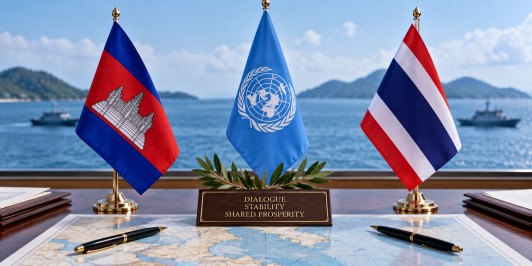
In a bid to resolve a protracted maritime boundary conflict in the Gulf of Thailand, Cambodia and Thailand have embarked on a conciliation process supported by the United Nations. This initiative falls under the auspices of the United Nations Convention on the Law of the Sea (UNCLOS), with the foreign ministers of both nations delivering inaugural statements to mark the commencement of the discussions.
Cambodia has outlined its desire to establish a definitive maritime boundary with Thailand. Failing that, Phnom Penh has suggested a joint development agreement that would enable both countries to share the resources located in the contested waters. On the other hand, Thailand has insisted that the talks should concentrate solely on the delimitation of the maritime boundary. While Thailand has agreed to participate in the process with an open mind, it has previously advocated for resolving the issue through direct bilateral negotiations.
For over 25 years, the two Southeast Asian neighbors have been at odds over approximately 26,000 square kilometers of ocean territory. This area is thought to be rich in natural gas and oil reserves, adding an economic imperative to the resolution of the dispute. A framework for the joint development of these resources was established in 2001 between the two countries. However, this arrangement was dissolved by Thailand in May, following heightened tensions and deadly border confrontations.
In response to these developments, Cambodia initiated the obligatory UNCLOS conciliation process in June. While the independent panel involved in this process has the authority to make recommendations, it’s important to note that its findings are not legally binding for either country. This endeavor marks a significant step in the ongoing efforts to bring a peaceful resolution to a dispute that has long posed challenges to both nations.