
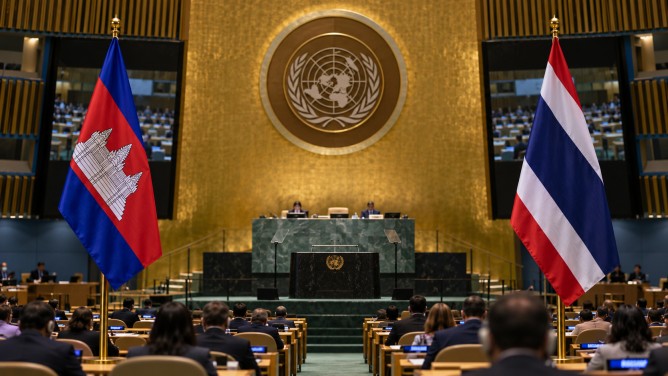
At the United Nations General Assembly, Cambodia and Thailand reiterated clashing perspectives on their enduring border dispute, highlighting the ongoing diplomatic tensions between the two Southeast Asian nations. Cambodian Foreign Affairs Minister Prak Sokhonn urged Thailand to adhere to existing bilateral agreements, resume border survey and demarcation efforts, and facilitate the return of displaced civilians.
Sokhonn emphasized that recent tensions have strained bilateral relations and impacted both civilian lives and cultural heritage. He asserted that rebuilding trust necessitates honoring past commitments, preventing further conflicts, and abiding by international law.
The maritime boundary dispute between the two countries remains unresolved. Cambodia has expressed its commitment to addressing the issue through international legal frameworks, having initiated compulsory conciliation proceedings under the UN Convention on the Law of the Sea. This action came after Thailand terminated the 2001 Memorandum of Understanding, which had previously served as a guideline for maritime dispute discussions. Meanwhile, Thailand insists that the conciliation should focus solely on maritime boundary delimitation, with Prime Minister Anutin Charnvirakul advocating for a sincere effort by Cambodia to rebuild trust through direct bilateral dialogue.
Prime Minister Anutin also called for enhanced cooperation on matters such as border security, demining, and combating transnational online scam networks. Despite the cessation of armed clashes following a ceasefire that concluded a 21-day confrontation last year, lingering disagreements over border issues continue to fuel diplomatic friction.
Cambodia has consistently advocated for resolving disputes with Thailand through established agreements and international law, whereas Thailand stresses the importance of bilateral dialogue and collaboration on border security matters. In their addresses to the UN, both nations underscored the necessity of strengthened international cooperation and peaceful resolution strategies, underscoring the ongoing need for diplomatic engagement to settle their differences.