
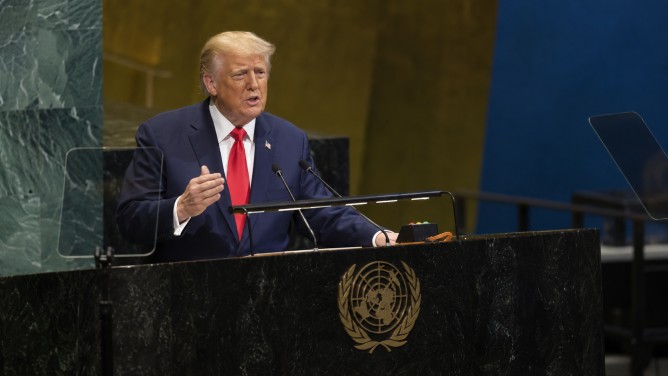
As global tensions simmer, the United Nations General Assembly in New York becomes a focal point for addressing escalating conflicts and technological advancements. UN Secretary-General António Guterres is set to open the assembly with remarks on global conflicts and the rapid development of artificial intelligence, setting the stage for a series of high-profile addresses and meetings.
Among the key speakers is U.S. President Donald Trump, who is expected to defend recent military actions against Iran. His address aims to underscore his administration’s strategy of balancing military force with diplomatic efforts, amidst ongoing economic and geopolitical concerns. The conflict with Iran, especially tensions surrounding the Strait of Hormuz, has been a significant point of contention, impacting international economic stability.
In addition to addressing the Iranian conflict, President Trump is poised to highlight efforts aimed at resolving the ongoing issues in Gaza. His administration has proposed initiatives including the disarmament of Hamas and the reconstruction of Gaza, although tangible progress remains limited. These efforts are part of a broader narrative Trump is likely to present, depicting his leadership as one striving for peace through both strength and negotiation.
The General Assembly also serves as a platform for Trump to articulate his administration’s approach to international institutions, including the United Nations. Having been a vocal critic of the UN since his return to office, Trump’s speech will likely reflect his stance on global governance and multilateral cooperation.
During his visit, Trump is scheduled to engage in bilateral talks with key international figures, including Ukrainian President Volodymyr Zelenskyy and Japanese Prime Minister Sanae Takaichi. These meetings are expected to further discussions on various geopolitical issues and strengthen diplomatic ties.