
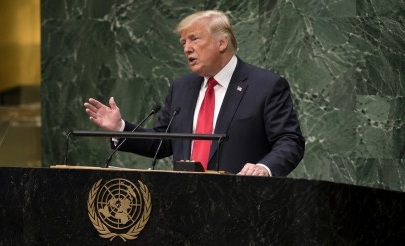
As global discussions on artificial intelligence intensify, U.S. President Donald Trump has taken a distinct stance by proposing a rebranding of the technology. Speaking at the United Nations General Assembly in New York, Trump suggested that the term “artificial intelligence” should be replaced with “super intelligence” in U.S. government documents, arguing that the current terminology underestimates the technology’s capabilities.
Trump’s comments come amidst a growing international debate on how to regulate AI, with over 20 political leaders advocating for enhanced cooperation, safety testing, and the establishment of common standards. Despite these calls, Trump dismissed the notion of broad international controls on AI, asserting that the potential dangers of the technology have been overstated. He emphasized that the development of AI should proceed, highlighting its potential to drive an economic impact surpassing that of previous technological revolutions.
In addition to the proposed terminological shift, Trump suggested the creation of an “AI Force” and the appointment of an AI czar to manage the technology within the United States. However, the administration has yet to provide detailed plans on how these initiatives would be structured or implemented.
The term “superintelligence” already holds a specific connotation in AI research, typically referring to a hypothetical system with intellectual capabilities far exceeding human abilities. Trump’s proposal, however, seeks to broaden this definition to encompass existing artificial intelligence technologies, potentially reshaping public and governmental perceptions.
As the U.S. government navigates its approach to AI, the President’s remarks underscore a commitment to advancing the technology while challenging prevailing international calls for stringent oversight. The ongoing debate reflects the complex balancing act between fostering innovation and ensuring global safety standards in the rapidly evolving AI landscape.