
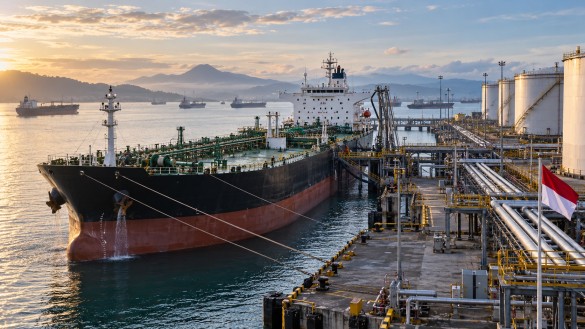
In an effort to bolster its energy security, Indonesia is seeking to diversify its gasoline imports by looking towards India and China, moving away from its traditional reliance on Singapore. Indonesian Energy Minister Bahlil Lahadalia announced plans to visit these countries to explore potential supply agreements, aiming to establish long-term contracts as directed by President Prabowo Subianto.
Historically, Singapore has been a key supplier of gasoline to Indonesia, particularly RON 90 gasoline. However, recent tensions between the two nations over energy supplies have prompted Indonesia to reconsider its dependency. These tensions were highlighted when Indonesia reduced its pipeline natural gas exports to Singapore by approximately 31 billion British thermal units per day. Despite maintaining that this reduction is within contractual limits, the move has sparked dialogue about diversification.
Singapore has responded to the reduction by noting that it represents a minor portion of its daily gas demand and is unlikely to significantly impact electricity prices. Nevertheless, Singaporean Prime Minister Lawrence Wong has urged gas suppliers to adhere to their contractual obligations, underscoring the importance of stable energy relations between the two countries.
As Indonesia pushes forward in its efforts to secure alternative gasoline suppliers, the broader goal remains to strengthen domestic energy security and reduce reliance on a single trading partner. The energy ministers of both countries, including Singapore’s Foreign Minister Vivian Balakrishnan and Indonesia’s Arrmanatha Nasir, are expected to engage in discussions to navigate these energy-related disagreements.
Indonesia’s initiative to diversify its energy imports aligns with its strategic aim to enhance resilience in its energy sector, ensuring that future supply disruptions do not overly depend on any one source. This move demonstrates Jakarta’s proactive approach in securing energy resources amidst regional tensions and global energy challenges.