
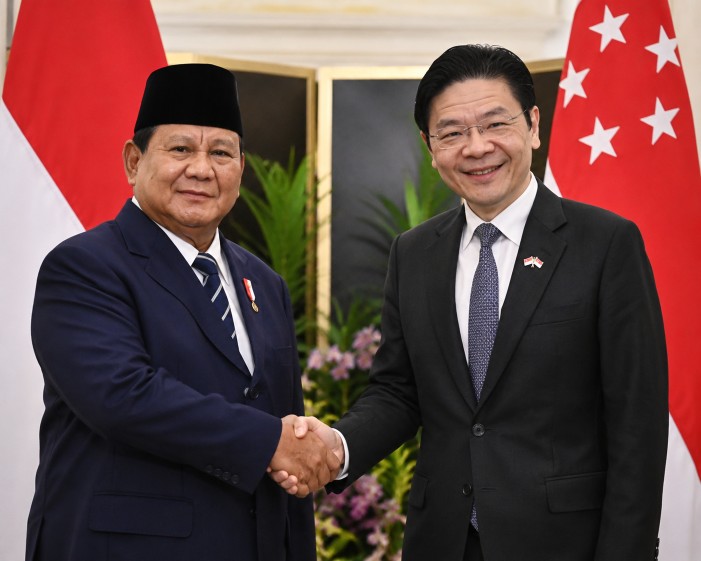
During a recent annual leaders’ retreat in Jakarta, Indonesia and Singapore signed several memoranda of understanding (MoUs) to bolster cross-border electricity exports. The agreements were concluded between Indonesian President Prabowo Subianto and Singaporean Prime Minister Lawrence Wong. Integral to these accords is Indonesia’s sovereign wealth fund, Danantara, which established partnerships with Keppel Electric, Sembcorp Industries, and Singapore Energy Interconnections. These collaborations aim to facilitate the development of electricity trade between the two Southeast Asian nations.
In addition to these partnerships, Danantara has outlined a roadmap with the Singaporean government to guide future discussions and the implementation of projects. This initiative is seen by Singapore as a significant step in reinforcing the ASEAN Power Grid. Concurrently, Singapore has emphasized Indonesia’s expansive potential for renewable energy. One of the key projects under this cooperation involves Sembcorp, Indonesia’s INA sovereign fund, and renewable energy company SESNA jointly developing a solar power project in Central Sulawesi. This venture, valued at $210 million, will include 200 megawatts of solar capacity and an 80 megawatt-hour battery storage system.
Indonesia is still in the process of negotiating electricity pricing before the commencement of exports. Meanwhile, Singapore has set a goal to import 6 gigawatts of low-carbon electricity by the year 2035, with an estimated 3.4 gigawatts expected to be sourced from Indonesia. The collaborations reflect a mutual commitment to advancing sustainable energy solutions and enhancing regional energy security.
These developments underscore the growing importance of cross-border energy cooperation in Southeast Asia. By leveraging Indonesia’s renewable resources and Singapore’s demand for cleaner energy, the agreements are poised to contribute significantly to the region’s energy landscape. As both nations continue to negotiate terms and finalize project details, the initiative is expected to pave the way for more integrated and sustainable energy networks across the ASEAN region.