
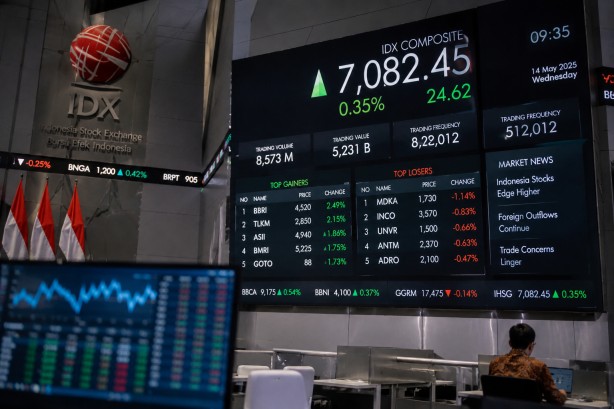
During the week ending on July 24, Indonesia’s primary stock market index, the Jakarta Composite Index (JCI), experienced a 0.34% rise. This increase was buoyed by heightened trading activity, even in the face of persistent foreign investor withdrawals and looming uncertainties in the global economy. The market capitalization of the Indonesia Stock Exchange reached Rp 10,870 trillion, with a notable 41% increase in average daily trading turnover, climbing to Rp 19.76 trillion.
Despite these gains in domestic trading, foreign investors continued to sell off Indonesian assets, leading to net outflows amounting to Rp 79.09 trillion so far this year. This trend underscores a cautious stance among international investors towards Indonesian markets amid broader economic concerns. The sentiment has been further strained by the rise in global oil prices, a consequence of escalating tensions in the Middle East.
Adding to the economic pressures, new tariffs imposed by the United States on imports from several countries, including a 10% tariff on select Indonesian goods, have contributed to the market’s cautious outlook. These measures have presented additional challenges for Indonesia as it navigates the complexities of international trade and economic relations.
Indonesia’s Finance Ministry has acknowledged the potential impact of increased oil prices on the country’s fiscal plans, particularly concerning the 2026 state budget. However, officials maintain that Indonesia’s overall fiscal health remains stable, suggesting a level of resilience in the face of these external pressures.