
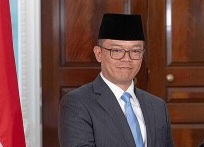
Indonesia has issued a call to reform the United Nations Security Council, emphasizing the need for the body to adapt to the evolving challenges brought about by artificial intelligence and other cutting-edge technologies. This appeal was made by Indonesian Foreign Minister Sugiono during a debate at the UN headquarters in New York. He highlighted how the global security environment is rapidly transforming due to breakthroughs in AI, autonomous weaponry, and nuclear advancements.
Sugiono pointed out that the current structure of the Security Council, which was established in the aftermath of World War II, is outdated and lacks the capacity to effectively address modern security threats. He stressed the importance of enacting meaningful reforms that would bring greater transparency, accountability, and inclusivity to the 15-member council. In particular, he advocated for stronger representation of developing countries and nations from the Global South in the international decision-making process.
According to Sugiono, the focus of these reforms should be on restoring confidence in the Security Council and enhancing its ability to respond to the complex global challenges of today. Echoing these sentiments, UN Secretary-General António Guterres also expressed concerns about the pace of technological advancements. He highlighted that developments in AI and autonomous weapons systems are outstripping existing international governance frameworks, leading to new and unpredictable risks.
The increasing incorporation of AI into military applications has become a significant concern for governments and international bodies. Over recent years, the Security Council has been addressing the implications of AI in warfare, underscoring the necessity for responsible regulation of these emerging technologies. Indonesia, in its pursuit of a non-permanent seat on the Security Council for the 2029–2030 term, remains committed to advocating for reforms aimed at enhancing the council’s representativeness and effectiveness.