
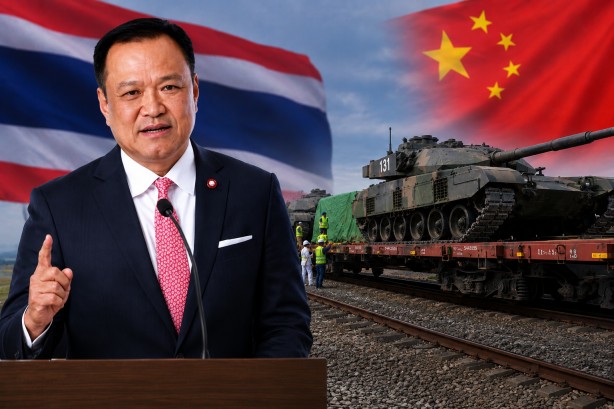
Amid ongoing tensions between Thailand and Cambodia, Thailand has voiced its concerns to China regarding the recent delivery of Chinese tanks to Cambodia. The Thai government fears that this military support might disrupt the delicate ceasefire established between the two nations following last year’s deadly border skirmishes. Thai Prime Minister Anutin Charnvirakul addressed the issue with Chinese President Xi Jinping during a recent meeting, as confirmed by Thailand’s foreign ministry. The Thai authorities are apprehensive that the timing and nature of the military shipment could further strain the already fragile relations with Cambodia.
This development involves the transfer of 39 Chinese-manufactured T-59D battle tanks to Cambodia, executed under a pre-existing military cooperation agreement between the two countries. Despite these concerns, Thai officials clarified that there is no evidence suggesting the tanks have been positioned near the Thai-Cambodia border. The relationship between Thailand and Cambodia has been tense since violent confrontations erupted last year along their shared boundary, rooted in longstanding disputes over territory and maritime claims based on colonial-era documents.
China, for its part, has emphasized that its military collaboration with both Southeast Asian nations is standard practice and not intended to threaten any third party. Earlier this year, China also supplied Cambodia with a Type 056 guided-missile corvette. Despite the current situation, Thai officials have acknowledged and welcomed China’s neutral position and its endeavors to mediate tensions, while stressing the necessity for Thailand and Cambodia to engage in direct dialogue to resolve their disputes.
In a bid to ease the tension and foster better communication, Thailand and China have agreed to establish a new dialogue mechanism involving their foreign and defense ministers. The initial discussions are expected to concentrate on tackling cross-border scam operations, highlighting the broader scope of cooperation beyond the immediate border issues. This step indicates a mutual interest in maintaining stability and addressing bilateral challenges through diplomatic channels.